As she prepared to graduate last weekend, Tiffani Painter said coming to DeLaSalle Charter High School from her small rural community changed her life – in a good way. Photo by Mike Sinclair.
Tiffani Painter was living a normal life in Warsaw, Missouri until her mother passed away in 2005.
“It was all about hunting and fishing,” she says.
Her mother arranged for her to live with family friends after her death, but eventually Painter wound up in the foster care system in Kansas City.
She was put into a group home and started school at DeLaSalle Charter High School at 3740 Forest. That was a big change.
“I had a strong country accent,” she notes.
Also, it was the first time Painter was introduced to a variety of people from different races and cultures. She now celebrates the diversity she found at DeLaSalle.
“Every one of the different races really helped me grow,” she says.
DeLeSalle serves urban students who need an alternative to traditional schools.
When she graduated last week, Painter had just finished her first semester at Penn Valley Community College. She’s interested in criminal justice and wants to be a crime scene investigator.

Squire Park neighbors took advantage of a break in the spring rains to plant native wildflowers in the traffic island at the intersection of Manheim and Tracy this weekend.
Across Midtown, neighborhoods have stepped up to take responsibility for planting and maintaining traffic islands.
That’s true of the Squire Park neighborhood, which has taken on a traffic island at the intersection of Manheim and Tracy.
This year, the neighborhood is adding a new element to the landscaping – native Missouri plants
“The neighborhood has worked on the triangle for several years,” Roberta Vogel-Leutung said. “This year we got a grant from the Missouri Prairie Foundation to add native plants to the design that is already there.”
She’s hoping their new planting of native wildflowers will both be showy and reduce long-term maintenance efforts. The design maintains the semi-formal landscaping by using short, showy plants with a year-round appeal.
Carol Davit of the Prairie Foundation said the Squire Park planting can also demonstrate how natives can be used in a public venue.
“We want to promote the use of nursery-propagated prairie plants in the built environment,” she said.
The foundation’s grant and matching founds from the Missouri Department of Conservation allowed Squire Park to put in 300 new plants.

Prairie dropseed, oak sedge, coneflowers, golden rod, and fall-blooming asters are some of the plants you can watch grow in the Squire Park prairie garden.

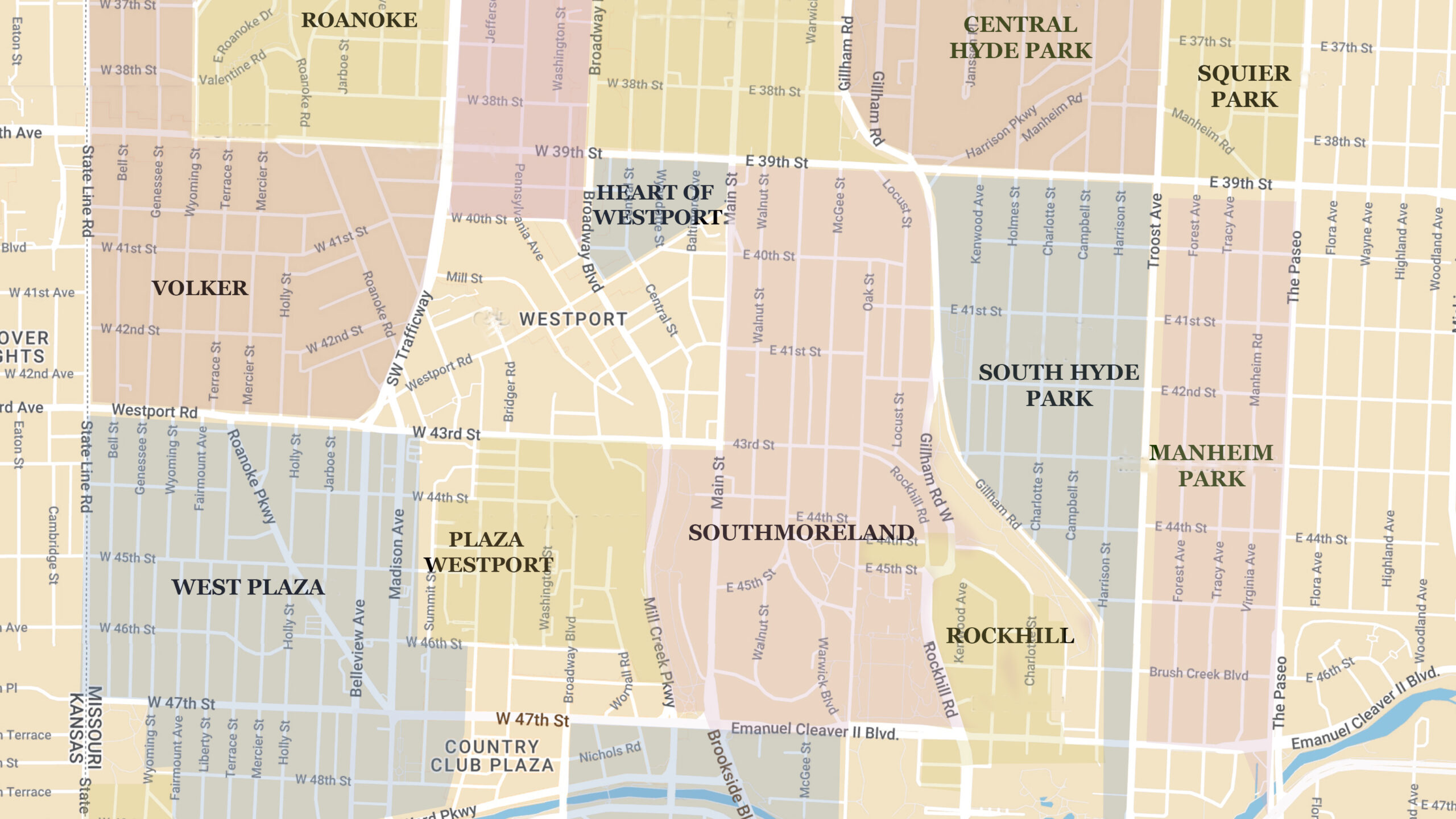
Architect Mike Jantsch and property owner Qamar Khan presented a new plan for a “multi-family house” they’d like to build in Volker at a meeting last week.
The owner of a controversial piece of property in the Volker neighborhood has agreed to meet with a group of residents. Qamar Khan, owner of the now-vacant lot at 3616 Bell Street, met last week with neighbors who have protested against his plan to build a “multi-family house” on the property.
After a house was razed on the site last year, neighbors protested against plans to build a house with eight living units on the site, saying it was out of keeping with the character of the neighborhood. The city eventually denied the building permit for the project, giving the owner a list of requirements to make it fit the zoning code.
Khan and his architect, Mike Jantsch, told about forty neighbors last week they still hope to build the eight-unit building on the site. Khan explained that he originally began looking for property where his daughter, a medical student, could live, and he was told it was zoned for they type of building he proposed.
Some neighbors told Khan they still oppose the eight-unit plan.
“I’ve lived directly across the street for 18 years,” Bill Yeats said. “People are extremely bummed out about this. We’re considering moving.”
Other neighbors told Khan Bell Street is a beautifully-preserved area and that the proposed house doesn’t fit into the streetscape. They also expressed concerns about the planned 16 parking spaces and the already-low water pressure on the street.
They asked Khan if he would consider building two or three duplexes rather than one large building on the site.
The owner said he could not say whether or not he would consider such a plan.
“So far, we have only looked at the eight-unit building,” he said, adding that he has not considered the financial implications of another project.
Khan, however, agreed to meet with a small group of neighbors to talk about their concerns.
Previous posts
- A new plan for Bell street multi-family house
- City reinstates public hearing for multi-unit housing in neighborhoods
- Building permit for 3616 Bell denied
- Volker neighbors continue protests over multi-unit house
- City’s “multi-unit house” zoning becomes an issue in Volker
The Midtown reaction to dramatically higher property assessments….the sudden closing of a charter school…and a tribute to the “red shirts” who make Main Street safer…that’s what we covered last week.
This word cloud shows some of the words we used last week at the Midtown KC Post.
If you find anything interesting, you can read more on our website at www.midtownkcpost.com. Remember you can also follow us on Facebook by liking our page, or sign up on our website for a daily news digest each weekday.
As county reassessment notices hit Midtown mailboxes, property owners protested that their assessed values has risen as their market values had declined. A Coleman High realtor was helping dozens of people appeal their new assessed values, but by the end of the week the county had promised to restudy the new values for many neighborhoods.
Transportation, present and future, continues to be a big issue for us. The mayor appointed a commission to study whether KCI, with its three terminals, is the best airport for residents and visitors and if not, what other options make sense. It was bike week, and the bus service took the chance to remind us that all Metro and Max buses now have bike racks. We also checked in on this year’s Tour de Brew, an event that mixes biking, beer and local history. The ongoing lawsuit over the downtown streetcars continued with an appeal by the city meant to speed up implementation.
The Main Street CID celebrated its anniversary by honoring the crews that patrol the street and keep it safe. We profiled one of the “red shirt crew,” who told us what is typical day is like for the crew.
Many Midtowners expressed shock as the state closed the Gordon Parks charter school in Volker suddenly. One of the founders said the state was wrong to only look at test score in an urban school struggling to help at-risk students catch up.
At city hall, the new 9 p.m. curfew proposed for the Plaza and Westport was tabled for a month.
Lawyers for the streetcar system filed a request for the Missouri Supreme Court to hear the appeal by those challenging it, which would bypass the appeals court.
If the high court takes the case, it would resolve the issue faster, which could clear bond sales for the $102 million Downtown streetcar system.
In January, a Jackson County judge dismissed the lawsuit filed by two Downtown business owners challenging the sales and property taxes for the system.
The business owners, Sue Anne Burke and Jeffry Rumaner appealed to the appeals court in Kansas City, where the case is pending.
Lawyers for the Downtown Streetcar Transportation Development District asked the appeals court to require the business owners to post a $20 million bond – extra costs they contended could be caused by the delay.
An appeals judge denied the bond request but did set an accelerated briefing schedule.
The business owners’ brief supporting their appeal is due by the end of this month.
For Donzell Falker, keeping an eye out on Main Street has been a steady job for four years now.
Falkner is one of the “red shirts,” employees of the Main Street Community Improvement District tasked with “promoting the general welfare and common good” of the Main Street Corridor from 27th to 47th Streets.
Falkner, who recently got promoted to sergeant, oversees a team of officers who cruise down Main Street on their bikes, monitoring activities, assisting with emergencies, responding to calls from business owners, and helping out visitors and residents.
A typical day for Falkner?
“We ride. We meet a lot of different people and deal with a lot of different types of people. We deal with homeless people, people drinking at the bus stop.”
Not all those folks are happy when Falkner tells them loitering at bus stops, for instance, is against the rules on Main Street.
He attempts to persuade them, gently at first, that they should move on if they want to avoid a visit from the police.
Some see the light immediately.
Others argue or even swing at him.
But for Falkner, it’s important to keep Main Street safe.
“My grandmother catches buses, too,” he says. “In the Main Street neighborhood, older folks say thank you to us a lot. They say ‘it’s been better since you guys got here.”
The Red Shirt Crew has been working on Main Street for six years. It’s made a difference, and Falkner says it has changed him, too.
“Dealing with the public can be a tad bit difficult,” he says. “Some people don’t like rules. I have learned you have to humble yourself in dealing with people in more escalated conversations.”
But Falkner also finds the job rewarding. He’s proud to have given homeless folks information about shelters and other services, and learned later that they took advantage of the help.
And he finds the CID to be a pretty good employer.
“They take care of us pretty good,” he says. “We’re kind of like a family.”
Four separate walks and races will result in several temporary road closures on May 17, 18 and 19.
They include a Saturday walk that will bring 8000 walkers and rolling road closures to the Plaza from 8 a.m. to noon.
Here are the details from the city
On Friday, May 17, the Rave Run 5K will begin on Arena Drive at Kemper Arena. Rolling road closures will take place from 8:30 to 10 p.m. on the following race route: Arena Drive west to American Royal Drive; south on American Royal Drive; east on 23rd Street/Avenida Cesar E. Chavez; and south on Allen Avenue, which turns into 25th Street. Once the race reaches Southwest Boulevard, runners will turn around and repeat the route in reverse, concluding on the east side of Kemper Arena.
Two events are scheduled for Saturday, May 18. The largest is the Heart Walk, which includes 8,000 walkers and takes place in the Country Club Plaza area. Rolling road closures will take place from approximately 8 a.m. to noon on the following race route: Theis Park to Oak Street; north on Oak Street, east on 45th Street, south on Rockhill Road, west along the Brush Creek path, north on Jefferson Street, and east on 47th Street to finish back at Theis Park.
Also on Saturday, the Restoration Run will limit traffic on Hickman Mills Drive between 103rd Street and Marion Park Drive from 8:30-10:30 a.m.
On Sunday, May 19, the Kansas City Triathlon will be held at Longview Lake. Rolling road closures will take place from 7 to 11:30 a.m. on the following race route: Begin at Longview Lake’s parking lot and head west on Pittenger Road; north on Raytown Road; east on 109th Street; make a U-turn at the intersection of 109th Street and View High Drive and continue west on 109th Street; north on Raytown Road; make a U-turn at the intersection of Raytown Road and the I-470 on/off ramps and continue south on Raytown Road; east on High Grove Road; make a U-turn at the intersection of High Grove Road and Southeast Raytown Road and continue west on High Grove Road; north on Raytown Road; and east on Pittenger Road to return to the parking lot of Longview Lake.
Please observe caution and obey all posted detours and barricades.
The closing of Gordon Parks Elementary Charter School is a tragedy, according to one of the school’s founders.
Dorothy Curry said yesterday that the school’s board, teachers and students were shocked to learn the State Board of Education had denied their charter renewal, forcing the school to close next Wednesday.
A spokesperson for the State Department of Elementary and Secondary Education (DESE) said the department recommended the application renewal be denied. A presentation supplied by DESE showed graphs of Gordon Park’s test scores showing they were lower than average scores in the Kansas City School District and across the state.
“As you can see from the school’s performance, they are in the bottom of the state below the state average and below Kansas City Schools. The students have been falling behind their peers in other districts for the past 3 years. The State Board voted unanimously to deny their application for charter renewal,” DESE spokesperson Sarah Potter said .
The school at 3715 Wyoming in the Volker neighborhood opened 13 years ago. It was founded by Curry and Sue Jarvis, two Kansas City women who volunteered at Operation Breakthrough on Troost, an early education child care and social services facility that serves the urban core. Gordon Parks was founded to serve at-risk students and help them reach their potential, according to the school’s website.
Curry says the school was aware that test scores were low, but Gordon Parks catered to students who often entered the school system several years behind. About 95 percent of the students qualified for the free/reduced lunch program, a common indicator of low-income used by schools. About 15 percent of the students (the highest ratio among Kansas City charter schools) qualified for special education classes.
“Our students came to us with many needs that had to be addressed,” she said. “We were helping the students get to the place where they could learn.”
She’s angry that state officials who closed the school relied only on test scores.
“They never came to look at the school. They didn’t care to understand,” she said. “If there aren’t schools like ours, these children will be lost.”

Each dot on this screen represents a criminal and the lines show their links. Kansas City law enforcement is using the patterns for a new approach to reducing crime.
Andrew Fox, UMKC assistant professor of criminology, doesn’t cuff bad guys but he does work with the anti-crime No Violence Alliance (NoVA).
Criminals are numbers to him, dots on a computer screen. He uses police intelligence to create social networks that link suspects and their associates.
The technology is used in medicine, for instance, to link contacts in sexually transmitted diseases.
“In a lot of ways, violence is like a disease and we can respond to it like a disease,” Fox said.
Kansas City police and federal agents, state and federal prosecutors, social service providers and others in NoVA use the data to target certain people, either for prison or for help.
The networks played in a recent 61-indictment sweep of alleged drug and gun offenders. They did as well in a recent “call-in,” when 120 suspects were asked to attend talks intended to persuade them to give up crime.
Fox believes the elaborate social networks – a high tech and supercharged version of what police have done for decades – are more advanced here than in other cities that have used the alliance model to successfully reduce violence.
Police everywhere will use them more and more, he said, and they will merge with geographic based “hot spot” policing, as the two have already merged in Kansas City.
Fox, 30, said he was fortunate to get the position with the alliance last year, in his first year at UMKC.
Before that he did similar work studying gang connections that was funded by homeland security grants.
The networks begin with years of police reports on contacts with suspects, who are given numbers. A NoVA network starts with suspects in murders, shootings or other serious assaults. Other police reports link them to other people and those other people to yet more people. Normally, police go “down the rabbit hole” to find such links after a crime but the network data allows more.
“You kind of give them the rabbit hole instead of them having to build it each time,” Fox said. “It’s a little more proactive on a larger scale.”
For NoVA, which uses arrests and social services to fight crime, the networks identify key leaders.
“We’re not saying they’re the most criminal, we’re trying to identify people who are the most critical to deliver a message to the network.”
Persuade them to leave crime, Fox said, and they can persuade others. Send them to prison and they are not easily replaced.
The strategy of approaching everyone in a network also sends a message: “If you or any of your friends engage in violence, law enforcement is going to start going after all of you.”
Shoot someone and your friends will pay, and many of them already have outstanding warrants.
The social networks also link the many law enforcement groups in NoVA, he said. “We kind of have a road map to work together.”
Fox said he is transitioning out of putting the networks together, having trained police crime analysts to do it.
His job will be to evaluate the project and report progress, he said. For instance, he will study what mix of social service programs and arrests produced what results.
It is like disease work, he said, looking at what pill had the best results at what dose.
The Gordon Parks Elementary School’s charter renewal application has been denied by the state. That means the school will be closing at the end of this school year.
The State Department of Elementary and Secondary Education today confirmed the charter denial. The school was up for a 5-year renewal, which State Board of Education considered at a meeting this week, and it voted unanimously to deny the application for charter renewal.
The school, at 3715 Wyoming in the Volker neighborhood, is a kindergarten through fifth grade charter school serving 240 students sponsored by the University of Central Missouri (UCM).
We’ll have more on this story.